A novel drawn from true stories of rural Japan
Beyond The Water
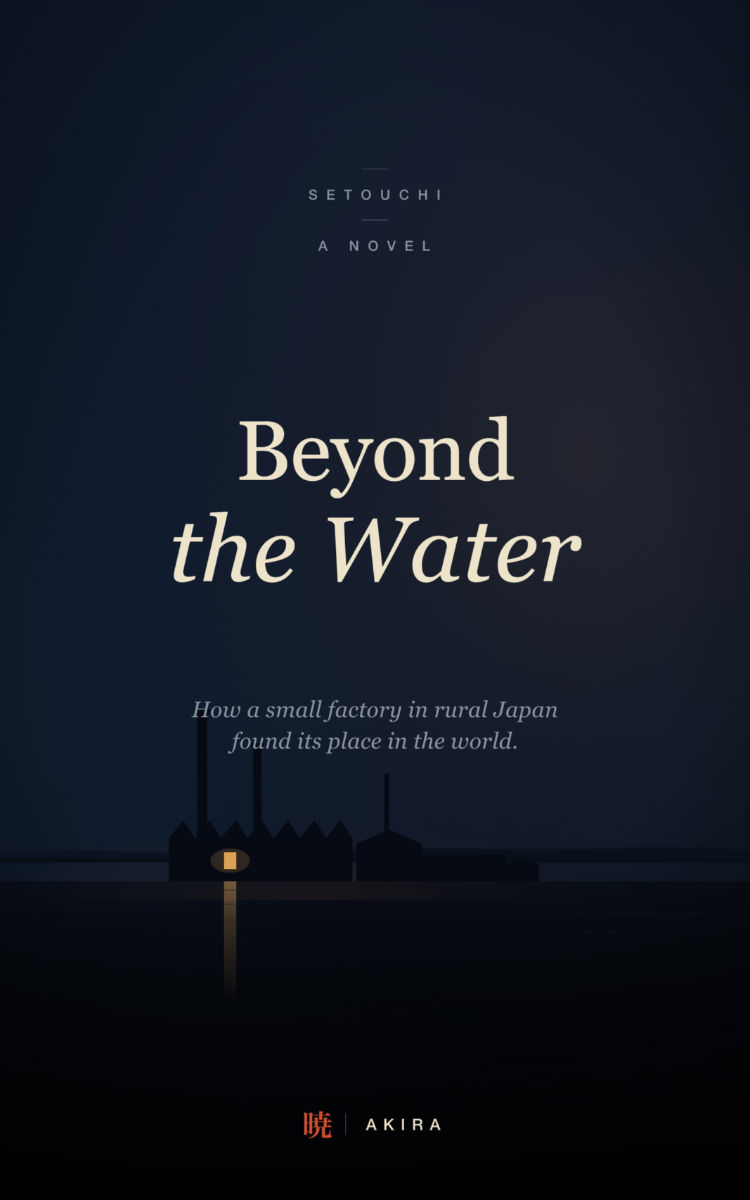
How a small factory at the edge of the Seto Inland Sea found its place in the world.
One factory. Twenty-eight people. A phone call that takes away twenty-five percent of everything. And a quiet decision, made against all odds, to set sail.
About the Book
A company at the edge.
A decision to sail.
Mouri runs a small precision manufacturer in a rural town on the Seto Inland Sea. Twenty-eight people. Generations of craft. And a thirteen-year partnership with their largest client that ends in a single three-minute phone call.
When the call comes, Mouri is left with a question every small business owner dreads: where do you find twenty-five percent of your revenue, in one quarter, with no warning? The domestic market has no answer. The numbers, as his sales manager tells him quietly, simply don't work.
Beyond The Water is a novel about what happened next, drawn from twenty-two years of taking a rural Japanese manufacturer to the world. It is a story of discovery: of markets, of people, of the hidden resilience in places the world has forgotten. It is about what a quiet man does when the sea he has always looked at becomes the direction he has to travel.
Written with the precision of an engineer and the patience of someone who has watched companies close, this is a book for anyone who has ever stood at the edge of what they knew and wondered what was on the other side.
From the Book
"Everything I'd been treating as a wall was actually a habit. I'd been selling in Japan because I'd always sold in Japan. Not because Japan was the right market. Just because it was the one I knew."
Beyond The Water · Chapter Five
Free Sample Chapters
Read the Prologue & First Two Chapters
It is four in the morning, and Mouri is running through streets he no
longer recognizes.
Then the phone call comes. Procurement, not the CEO. Thirteen years of
partnership, ended in four polite minutes. "The Cost of Riding a
Whale" is where the voyage begins.
Read the full opening free, right in your browser. No sign-up required.
Sample Issue
¥1,000,000 new. ¥300,000 to rent. Sleeping in a chest for twenty years.
The kimono that found its life overseas.
"My daughter wants to wear the kimono Mom wore at our wedding." My wife and I looked at each other. That kimono had been asleep in a chest since the ceremony. Grandmother had commissioned it: silk, hand-dyed, a pattern that took six months. It had been worn once.
All over Japan, chests like ours hold kimonos like ours. New: ¥1,000,000. Rental for a coming-of-age ceremony: ¥300,000. And still they sleep, because in Japan, the occasions to wear one grow fewer every year.
But on Instagram, searching #vintagekimono, you find 1.5 million posts. In London, a 24-year-old wears one over jeans. In Berlin, a designer uses the silk as the lining of a coat. In a New York apartment, one hangs framed on a wall.
To them, it is not a garment collecting dust. It is a treasure.
This week's letter is about how that gap between Japan's overlooked and the world's undiscovered becomes a path. And about the small businesses and families who are beginning to walk it.
About the Author
Hinomoto Akira
For twenty-two years, Hinomoto Akira helped Japanese manufacturers find customers they didn't know existed, in markets they had never considered, through relationships built one careful conversation at a time.
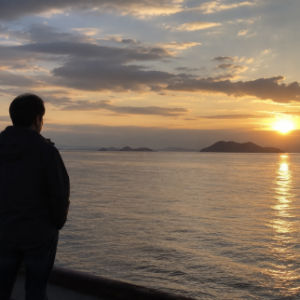
Beyond The Water is a novel about what that meant from the inside: running a small factory in rural Japan, watching the domestic market shrink, and refusing to accept that the sea visible from the cafeteria window was a wall rather than a road.
The newsletter, Hidden Treasures of Rural Japan, is a continuation of that work: finding the things Japan overlooks, and showing the world where to look. Written in English, published weekly. Please email us any questions.